
Manufacturer of high-performance seals
Sealing solution supplier
Company News
Industry News
Exhibition
Differences between the turning sealing process and the traditional molded sealing production process
Release Time:
2022-12-14 14:35
Source:
The raw material for turning polyurethane seals consists of imported liquid raw materials that are heated, melted, and then poured into pre-formed billet containers. These billets are subsequently processed using specialized CNC seal machining equipment, where software-programmed data for various seal types is transmitted to guide the machining process. The result is a fully completed hydraulic seal component.
1. Molded hydraulic seals: Molded hydraulic seals are produced by heating and melting filled rubber or polyurethane materials through molds. However, they have the following shortcomings:
①. Poor compactness: Due to insufficient filling material in the open mold, defects are likely to occur in the product.
②. Depending on the temperature environment, material batch, product size, and other factors, the shrinkage rate may deviate from the theoretical data, leading to significant dimensional tolerances in the finished products and making it difficult to precisely control the dimensions.
④. Different sections and dimensions require dedicated molds, resulting in a complex manufacturing process and relatively long lead times for delivery.
2. Moldless Turning of Seals: The barrel material (raw material) used for moldless turning of hydraulic seals is formed through high-pressure extrusion after being heated and melted.
Raw materials, formulations, and manufacturing processes ensure that performance characteristics—such as sealing capability, wear resistance, and fatigue resistance—are on par with European products, while maintaining pricing comparable to domestic competitors. This offers exceptional value for money. Precision-machined according to your specific dimensional requirements, it is the ideal choice for your needs.
Moldless turning seals have the following characteristics:
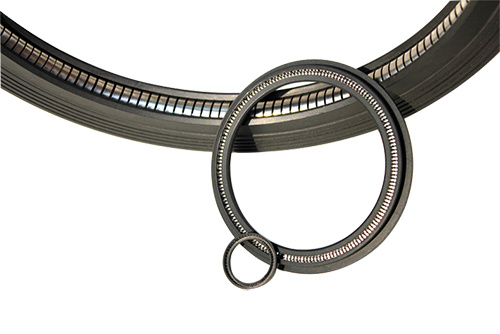
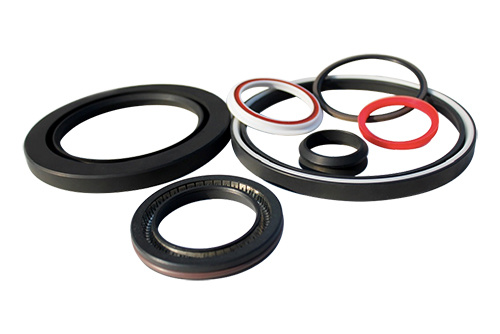
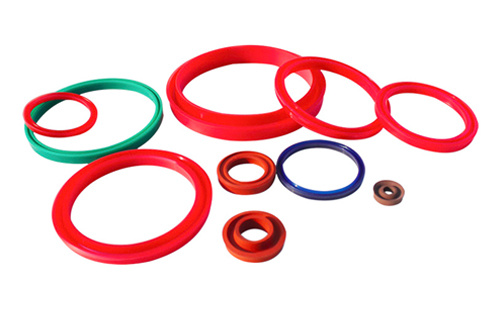
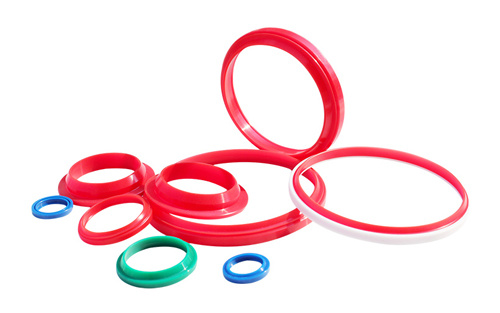
1. There are no limitations on standard or non-standard shapes; any cross-sectional profile can be turned and machined, including various sizes of dust rings, shaft-mounted U-rings, hole-mounted U-rings, and specially shaped components.
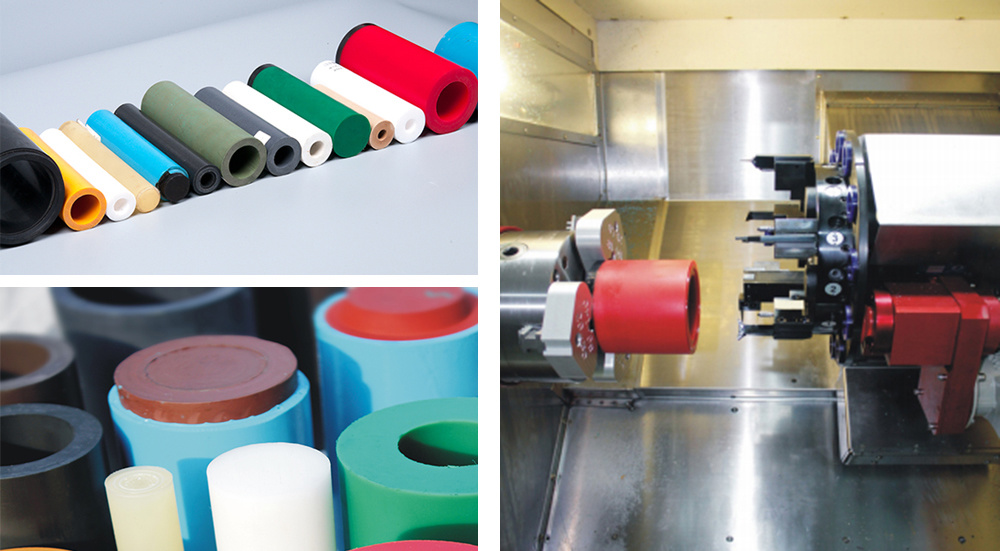
2. Processing is available for diameters ranging from 4 mm to 2.5 meters, without the need for mold opening.
3. Specialized machine tools and cutting tools are used for processing imported seals, ensuring high product precision and meeting the requirements of equipment under various operating conditions.
4. Fast delivery schedule. Urgent orders can be delivered on the same day, while specifications within 1 meter are delivered within 7 days, and those ranging from 1 to 2.5 meters take 15 days. This significantly reduces the supply cycle and minimizes equipment downtime.
5. Manufactured using high-quality imported raw materials, the product features excellent characteristics such as hydrolysis resistance, oil resistance, high tear strength, and superior physical performance.
Previous page

We sincerely welcome customers from home and abroad. We are willing to cooperate with you sincerely to create a better tomorrow!
Ningbo Yuka Sealing Industry Co., Ltd.
Address: No.141, Gongmao 1st Road, Jishigang Industrial Zone, Haishu District, Ningbo City
Keywords
Youjia Sealing | Sealing Components
Copyright © Ningbo Yuka Sealing Industry Co., Ltd All Rights Powered by www.300.cn SEO