
Manufacturer of high-performance seals
Sealing solution supplier
Company News
Industry News
Exhibition
Dry Goods Sharing: Learn About Semiconductor Sealing Rings in Just One Minute
Release Time:
2023-04-17 17:34
Source:
The semiconductor sealing ring is an essential component widely used in electronic devices. Its primary function is to protect semiconductor elements, providing isolation, moisture resistance, and corrosion protection under harsh conditions such as high temperatures and high humidity, thereby ensuring the stability and reliability of semiconductor components. So, how exactly does the semiconductor sealing ring achieve these functions? Let's take a closer look below:
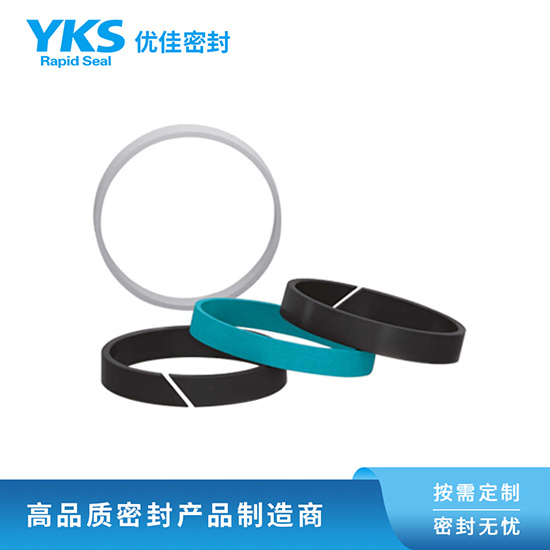
The material of the semiconductor sealing ring
Common semiconductor sealing materials include silicone, organic adhesives, nylon, phenolic resins, and liquid crystal polymers. These materials exhibit excellent thermal insulation, oxygen barrier, and moisture-proof properties, effectively protecting semiconductor components.
The structure of the semiconductor sealing ring
The semiconductor sealing ring features a dual-layer structure, consisting of an inner layer and an outer layer. The inner layer is tightly fitted against the surface of the semiconductor component, while the outer layer is securely fixed to the housing of the semiconductor device. Thanks to the precise fit provided by the annular design, the inner sealing ring effectively isolates the internal environment of the component from external factors. Meanwhile, the outer sealing ring further enhances the overall sealing performance, ensuring the stability and reliability of the device even under harsh operating conditions.
The manufacturing process of semiconductor sealing rings
The manufacturing processes for semiconductor sealing rings generally include injection molding, extrusion molding, and compression molding. Each method has distinct effects on the performance and cost of the sealing rings, making it essential to select the most appropriate technique based on specific application requirements.
Applications of Semiconductor Seals
Semiconductor sealing rings are widely used in fields such as semiconductor components, LED packaging, optical communications, and power electronics. They protect components from external environmental factors, extend their service life, and enhance their stability and reliability.
The Development Trends of Semiconductor Seals
With the continuous upgrading and replacement of electronic products, the demands for semiconductor sealing rings are also steadily increasing. In the future, semiconductor sealing rings will become more environmentally friendly and stable, meeting even stricter environmental requirements.
In summary, semiconductor sealing rings play a crucial role in the electronics industry by protecting semiconductor components from external environmental factors and ensuring their stable and reliable operation. By gaining a deeper understanding of these sealing rings, we can better grasp the working principles of this essential component, thereby providing valuable insights and support for the design and manufacturing of electronic products.
Semiconductor sealing rings play a crucial role in the production of electronic components, but their use also requires attention to the following points:
Select the appropriate seal ring size to avoid situations where the surrounding area is either too large or too small.
Clean the sealing ring in advance, ensuring it is free from dust and foreign particles.
During use, avoid excessive stretching and compression to ensure its normal service life.
For the storage and maintenance of sealing rings, ensure they are protected against contamination and moisture.
Please handle with care during use to avoid mechanical damage.
Semiconductor sealing rings are commonplace in our daily lives, yet we rarely pay close attention to their function.
During my internship at the factory, I was responsible for inspecting the sealing rings of semiconductor components. To ensure quality, I had to examine over a hundred components each day—carefully holding those tiny sealing rings in my hands, scrutinizing their size, material, and surface smoothness. Through this experience, I came to realize that even a seemingly simple component requires immense attention to detail and meticulous craftsmanship during manufacturing.
Although the semiconductor sealing ring is small, its role is irreplaceable. It effectively shields components from external environmental factors such as dust, moisture, and high temperatures, thereby extending the lifespan of the devices. Behind every semiconductor component lies this unassuming yet indispensable sealing ring.
In our daily lives, there are many seemingly insignificant little things that, however, profoundly influence the quality of our living. It is precisely because of these "unassuming" elements that our lives become more comfortable and convenient. Let us express gratitude to each and every "unremarkable" component—for it is they who have made an invisible yet invaluable contribution to our everyday existence!
Semiconductor sealing ring, sealing ring

We sincerely welcome customers from home and abroad. We are willing to cooperate with you sincerely to create a better tomorrow!
Ningbo Yuka Sealing Industry Co., Ltd.
Address: No.141, Gongmao 1st Road, Jishigang Industrial Zone, Haishu District, Ningbo City
Keywords
Youjia Sealing | Sealing Components
Copyright © Ningbo Yuka Sealing Industry Co., Ltd All Rights Powered by www.300.cn SEO